I have always had a soft spot for cats. That is probably why the discovery of a new wild cat species immediately caught my attention. The more I read about it, the more I realised this wasn’t simply a story about another cat. Discovering a new species doesn’t always require travelling to an unexplored island or the bottom of the ocean. Nature can still surprise us with species that have been living in the world around us, hidden in plain sight, simply waiting for us to recognise them.
The Cat “Tigrino” That Started the Mystery
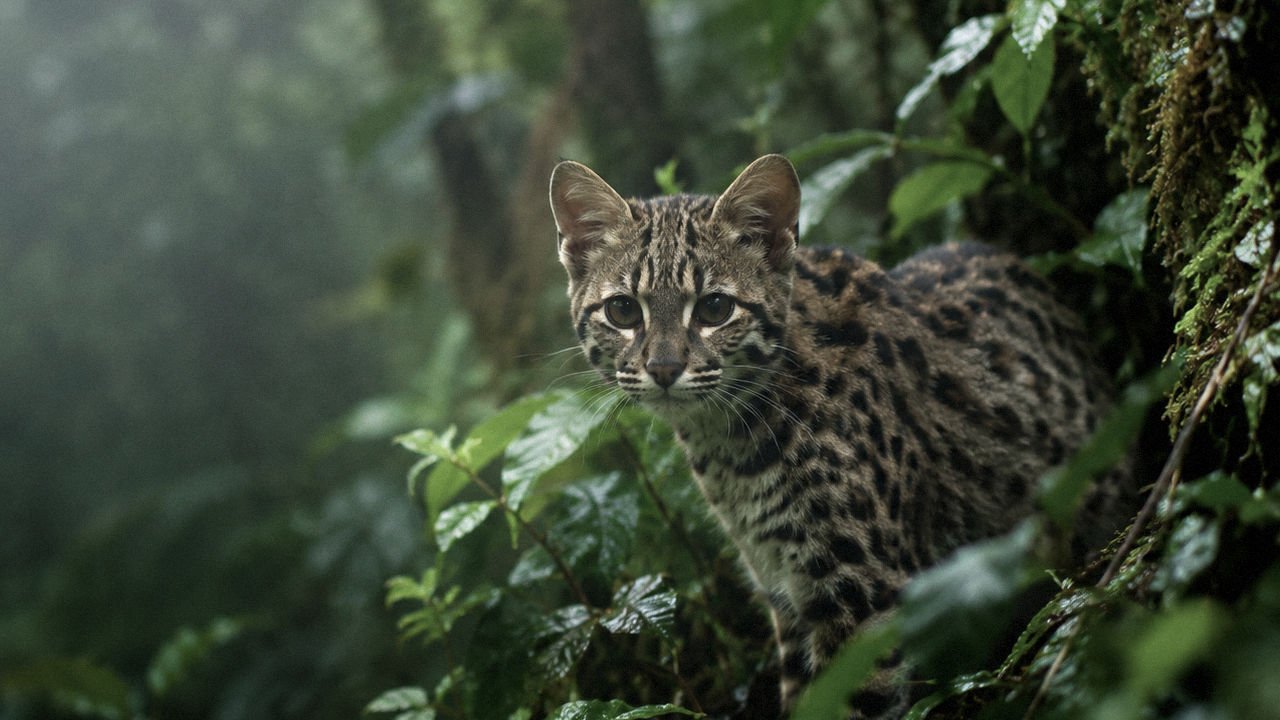
Tigrino, a small 10-year-old male spotted wild cat from Bolivia’s Yungas region. When the animal was found as a kitten by a local resident, it was initially mistaken for a domestic cat and was nicknamed “Tigrino”. But as it grew, it became clear that this was no ordinary house cat. Years later, when Bolivian scientist Paola Nogales-Ascarrunz encountered Tigrino at a wildlife sanctuary in 2016, she noticed that something about the animal seemed different. The mystery wasn’t its existence, but the truth about what it really was.
Tigrino looked remarkably similar to other tiger cats, a group of small wild cats found across parts of Central and South America. Their similar appearance has made them surprisingly difficult to distinguish, even for experts. The tilcayo species cat was almost like a face lost in a crowd—visible, but easily mistaken for someone else. So scientists needed something more reliable than appearance. They turned to genetics.
Genomic Analysis Told A Different Story
To our eyes, these cats can look like variations of the same story. Their DNA, however, tells a different one. Researchers compared genetic material from living animals and museum specimens to investigate the evolutionary history of tiger cats. What they found completely changed the picture. The research formally identified five genetically distinct tiger-cat species, including the newly described Leopardus tilcayo, or the Tilcayo cat. Interestingly, while new to science, local communities in Bolivia had known the cat for generations, calling it “Tilcayo”, a traditional name the researchers preserved in its scientific title.
Nature had apparently written another chapter of the cat family tree, scientists just hadn’t found the page yet. And this isn’t a species that suddenly appeared. Researchers estimate that the Tilcayo lineage separated from other tiger cats more than 1.4 million years ago.
One Cat. One Species. Many Questions.
The discovery comes with an uncomfortable detail. Direct scientific observation of living Tilcayo cats remains extraordinarily rare, with researchers having directly examined only two live individuals including Tigrino. That doesn’t necessarily mean Tigrino is the only one left. Researchers believe other Tilcayo cats could still be living in the wild, particularly in the forests of Bolivia’s Yungas region.
Finding them, however, will require more research. And that uncertainty matters. One cat is enough to change a scientific classification. Understanding the fate of an entire species requires knowing far more than the existence of a single individual. Before a species can be properly protected, scientists need to know where it lives, how many individuals remain, and what threatens its survival.
We Named It. But Can We Protect It?
There is something almost ironic about discovering a species only to realise that the forests it depends on are disappearing. The Yungas forests are home to extraordinary biodiversity, but they also face pressures from human activities, including deforestation, agriculture, fires and mining.
Humanity has become very efficient at mapping, measuring and naming the natural world. The harder part, apparently, is leaving enough of it untouched.
We can spend years tracing an animal’s DNA, understanding its evolutionary history and finally giving it a scientific name. Yet the habitat that allows that animal to exist can be damaged far more quickly. That makes the discovery of the Tilcayo cat more than an exciting addition to the world’s list of species. It is also a reminder that identification is often the first step towards conservation.
We Still Don’t Know the Nature As Well As We Think
A new species can change more than a scientific checklist. It can change the questions we ask about the world around us. It amazes me to think that if one small wild cat can remain scientifically unrecognised for so long, how many other species are still waiting to be studied, understood and protected? And how many species have already gone extinct without us even realizing it!
The Tilcayo cat is more than a new name in the catalogue of life. It is a reminder to look closer to the forests we think we know, the creatures we often overlook and the biodiversity whose value becomes impossible to ignore once it is at risk of disappearing.
Sources & Credits
This story was researched using scientific literature and publicly available reference material, including:
- Phylogenomics and museomics reveal five distinct species of tiger cats in South America. Current Biology.
- Meet the First New Cat Species Discovered in 100 Years. National Geographic.
- Tilcayo. Wikipedia.
The information in this story has been independently researched and written by Smagazene contributor Diya Das and edited by Susovan Malakar. Sources are provided for factual reference and further reading.
Image Credit
Original Photograph of Leopardus tilcayo via Wikimedia Commons by researcher Paola Nogales Ascarrunz, licensed under CC BY-SA 4.0.
The original photograph has been digitally modified for use as the featured image of this Smagazene story.

.jpg)